

You switch on the chimney, start your tadka, and within a minute the kitchen smells of oil and smoke. If this sounds familiar, you may be dealing with KAFF chimney suction low – a problem that is far more common than most homeowners expect.
A kitchen chimney only works well when air can flow freely: through a clean filter, past a healthy fan and motor, and out through a clear duct. If any one of these is restricted, the chimney may still sound normal but fail to pull smoke effectively. Heavy Indian cooking – frying, tempering and high-flame cooking – tends to show these weaknesses quickly.
This guide explains seven possible causes of a KAFF chimney low suction problem. For each one you will find the typical symptoms, what you can safely check, a practical solution, and when it is time to call a professional.
1. Grease and Dirt Buildup in the Chimney Filter
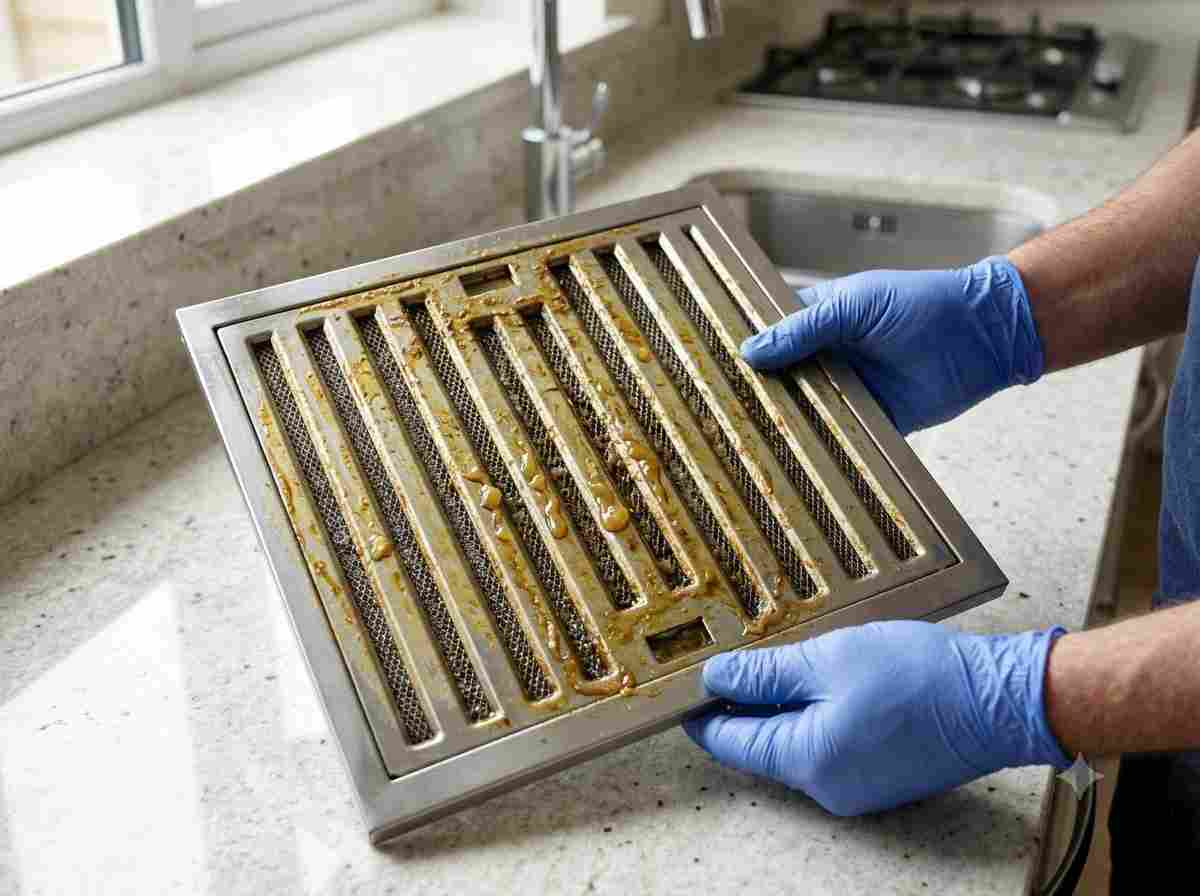
This is the most frequent reason a kitchen chimney is not pulling smoke. Oil vapour sticks to the filter and gradually clogs it, so the fan has to work against a layer of grease.
Common symptoms: smoke lingers near the hob, a sticky or oily filter, a greasy smell from the chimney, and oil dripping from the hood or collector.
What you can safely check: with the chimney off and unplugged, remove the accessible filter as shown in your manual and look at it. A thick, sticky film means it needs cleaning.
Practical solution: chimney filter cleaning is simple. Soak the filter in hot water with a mild degreasing liquid, gently brush it, rinse well, and let it dry completely before refitting. Heavy fryers will need to clean it more often than light cooks; follow the interval in your manual rather than a fixed rule. For auto-clean or filterless models, use the auto-clean function as described in the manual and empty the oil collector when needed.
When to call a technician: if suction stays weak after the filter is clean and correctly refitted, or if the filter is bent or damaged.
2. Blocked or Dirty Exhaust Duct
In a ducted chimney, smoke has to travel through the duct and out of the building. Grease, dust, cobwebs, insects or even nests can build up in the duct or at the outside vent, causing chimney duct blockage.
Common symptoms: suction is weak even with a clean filter, little or no air coming out of the outside vent, a flap at the outlet that does not open, or a greasy smell in the room.
What you can safely check: look at the outside vent cover from a safe position (avoid ladders and balconies without proper support). See whether the flap or damper moves freely and whether debris is visible.
Practical solution: remove visible, easily reachable debris from the outlet only when it is safe to do so. A full duct cleaning or replacement is better left to a professional.
When to call a technician: if you suspect a blockage inside the duct, if the duct runs inside a false ceiling or wall, or if the outlet is out of safe reach.
3. Excessive Bends or Incorrect Duct Installation
Even a clean duct can restrict airflow if it is badly planned. In general, a longer run, sharp bends, a narrow duct or a ribbed flexible pipe that sags all add resistance, so less air leaves the kitchen.
Common symptoms: suction was never strong since installation, the chimney is noisy but smoke still escapes, or the duct is visibly kinked, crushed or sagging.
What you can safely check: look at the visible part of the duct above the chimney. Note any sharp elbows, kinks, loose joints or a pipe that has been squeezed behind cabinetry.
Practical solution: a shorter, straighter duct with fewer bends generally improves airflow. Your manual will mention the recommended duct size for your model; confirm it before any change.

When to call a technician: if the duct needs re-routing, replacing or resizing. This is usually the right choice, because it may involve the false ceiling, wall openings or the chimney itself.
4. Incorrect Filter Fitting or Restricted Airflow
Sometimes the filter is clean, but it has been refitted incorrectly, or something is blocking the air path inside the hood.
Common symptoms: suction dropped right after cleaning, the filter rattles or does not sit flush, a gap is visible around the filter, or a missing or damaged filter.
What you can safely check: with the power off, confirm the filter is the right way round, sits firmly in its slot and is not bent. Check that the oil collector cup and any removable panel are in place.
Practical solution: refit the filter exactly as the manual shows. Replace damaged filters with parts suitable for your model, and do not cover or modify vents to “improve” suction. For ductless (recirculating) models, carbon or odour filters are replaced rather than washed; follow your manual on this.
When to call a technician: if the filter does not fit properly, a part is broken or missing, or you are unsure which replacement is correct.
5. Fan or Impeller Problems
The impeller (the fan wheel) pushes air through the chimney. If oil builds up on its blades, or the wheel is loose, bent or unbalanced, it moves far less air.
Common symptoms: a rattling, scraping or vibrating noise, a motor that sounds normal but moves little air, or visible oil being thrown from the fan housing.
What you can safely check: only listen and look. With the chimney running, notice any new noise or wobble. With power off, glance at what is visible without removing panels.
Practical solution: impeller cleaning, tightening or replacement involves opening the motor housing. Do not attempt this yourself, as this area is close to live electrical parts.
When to call a technician: any time you hear unusual noise or suspect the fan is dirty, loose or damaged. These are typical kitchen chimney motor problems to be checked in person.
6. Motor Wear or Electrical Faults
Chimney motors work hard, often in hot, oily air. Over time, a motor may weaken, or a related component such as the speed control or touch panel may fail.
Common symptoms: a humming sound with little or no rotation, suction that is weak on every speed setting, a motor that gets very hot, the chimney tripping the MCB, or controls that do not respond.
What you can safely check: confirm the plug and socket are secure, the wall switch is on, and the MCB has not tripped. Try the remote (if any) with a fresh battery. If the socket or MCB itself seems faulty, have an electrician look at it.
Practical solution: there is no safe DIY fix for motor or electrical faults. Diagnosis needs proper testing, and repair or replacement is a technician’s job. If the chimney is in warranty, contact KAFF through its official website first.
When to call a technician: immediately if you notice a burning smell, sparks, tripping, or a hot motor. Switch off and isolate the power, and stop using the chimney until it is checked.
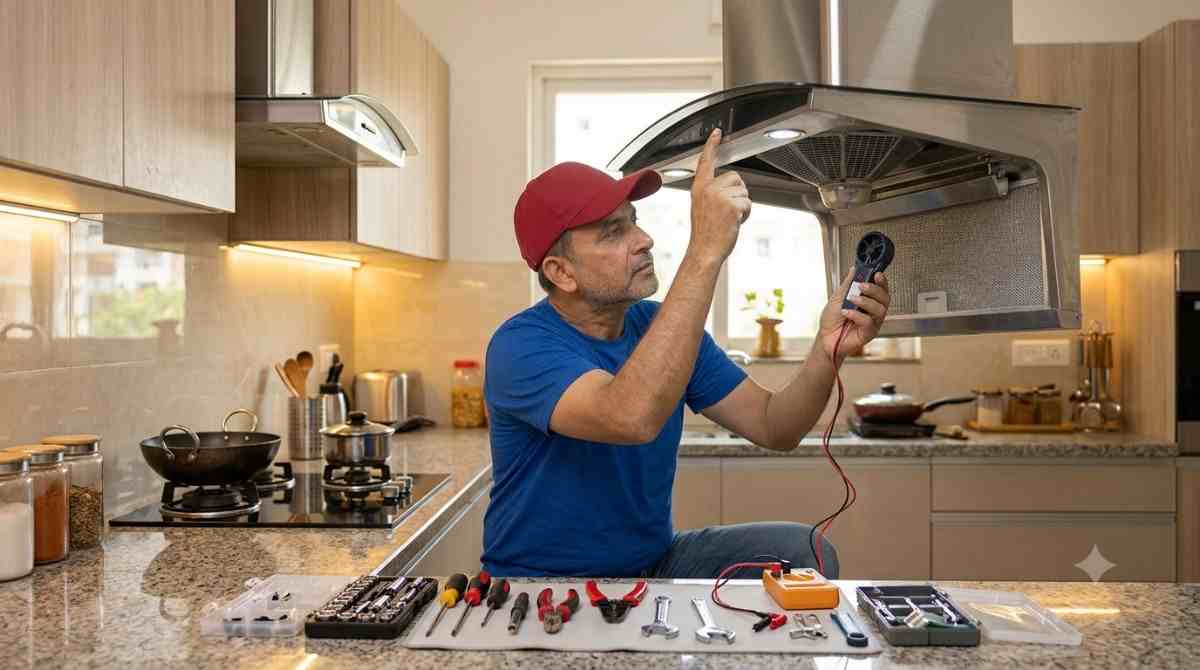
7. Incorrect Chimney Usage, Unsuitable Installation or Ventilation Issues
Sometimes the chimney is healthy, but the way it is used or installed limits performance.
Common symptoms: smoke escapes at the sides of the hood, the chimney only struggles during heavy frying, or it works better when a window is closed or opened.
What you can safely check:
- Speed setting: are you using a low speed during heavy cooking?
- Timing: do you switch the chimney on only after smoke has built up?
- Coverage: is the hood wide enough to cover the hob, and is it mounted at the height your manual recommends?
- Drafts: does an open window or a fan blow smoke away from the hood?
- Type: is it a ductless (recirculating) model, which works differently from a ducted one?
Practical solution: switch the chimney on before you start cooking, use a higher speed for frying, and keep it running for a few minutes afterwards. Reduce strong cross-drafts near the hob. If the hood is too small or too high for your hob, it may need to be re-fitted or replaced with a better-suited model; your manual or KAFF’s official website can help you confirm a suitable size and mounting height. Note too that excess smoke or soot sometimes comes from the burners rather than the chimney, so a hob repair service may be relevant if your flame looks yellow or sooty.
When to call a technician: if the installation height, duct route or hood size needs changing, or you cannot tell whether the problem is the chimney, the hob or the kitchen ventilation.
How to Improve KAFF Chimney Suction
A little routine care keeps suction stable. These tips are safe for most households, always alongside your manual.
Safe maintenance habits
- Power off first. Switch off and isolate the power before cleaning anything.
- Clean filters on schedule. Use the interval in your manual, and clean sooner if you fry often.
- Dry before refitting. A wet filter can attract more dust and grease.
- Wipe the hood. Remove oil from the visible surfaces, edges and collector cup with a damp cloth.
- Run it early. Switch on before cooking starts and leave it on briefly afterwards.
- Use the right speed. Higher speed for frying, lower for light cooking.
- Use auto-clean as directed. If your model has it, follow the manual’s instructions.
- Keep the outlet clear. Make sure nothing blocks the outside vent.
- Schedule a professional check. If suction keeps falling, a technician can test the duct, fan and motor.
What not to do
- Do not open the motor housing, wiring or control board.
- Do not spray water or liquid cleaner on electrical parts.
- Do not use the chimney if you notice a burning smell or sparks.
For related guidance, see our article on a kitchen chimney not sucking smoke properly.
Frequently Asked Questions
Why is my KAFF chimney suction low?
The most common reasons are a greasy filter, a blocked or badly routed duct, a dirty or loose impeller, and a weak motor or electrical fault. Usage habits and installation height can also play a part. Start with the filter, then have the duct, fan and motor checked if the problem continues.
Can a dirty filter reduce chimney suction?
Yes. A grease-coated filter restricts airflow, so the chimney pulls less smoke even though it sounds normal. Cleaning it as described in your manual often improves performance.
How often should a kitchen chimney filter be cleaned?
It depends on how much you cook and fry. We do not give a fixed interval for KAFF models; check your chimney’s manual or KAFF’s official guidance, and clean sooner if the filter feels oily or suction drops.
Can a blocked duct affect chimney performance?
Yes. If air cannot leave through the duct, the chimney cannot clear smoke efficiently. Debris, grease, kinks, long runs and many bends can all reduce airflow.
When should I call a chimney technician?
Call one if suction stays weak after cleaning the filter, if you hear unusual noise, or if you suspect a duct, fan or motor problem. Call immediately for a burning smell, sparks, a very hot motor or tripping power, and stop using the chimney until it is checked.
Can a chimney motor problem cause weak suction?
Yes. A worn motor, a faulty capacitor or control component, or a damaged impeller can all reduce airflow. These need professional testing; do not attempt motor repairs yourself.
Need Help With a Weak-Suction Chimney?
If you have checked the filter and the suction is still poor, a qualified technician can inspect the duct, fan and motor. Contact Appliances Repairs to enquire about our kitchen chimney repair service or browse our wider appliance repair services.
Toll-free: 1800 210 2966 | WhatsApp: +91 8104268556
Disclosure: Appliances Repairs is an independent appliance repair service provider and is not an authorised service centre of KAFF or affiliated with the manufacturer.
Looking for more practical kitchen appliance guides? Visit our blog.