

You switch on the chimney, the fan hums, the light glows, and yet the smoke from your tadka still drifts across the kitchen. If your Elica chimney fan is running but suction feels weak, you are not alone.
A running fan only tells you the motor is turning. It does not tell you that enough air is travelling through the filter, up the duct and out of your home. In most cases, weak suction is an airflow problem, and that airflow can be limited by grease, a restricted duct, a badly fitted part, a tired motor or the kitchen itself.
This guide covers seven possible reasons behind an Elica chimney suction weak complaint, what you can check safely, and when to call a professional. If you would like the problem inspected, see our kitchen chimney repair service. For a brand-neutral overview, you can also read our guide to a kitchen chimney not sucking smoke properly.
Why a Running Fan Does Not Always Mean Good Suction
Think of a chimney as a path: smoky air enters at the front, passes the filter or baffle area, is pushed by the fan, and leaves through the duct. If any part of that path is restricted, the fan can sound busy while little air moves.
One point matters before you start. Elica sells several chimney designs in India. Some use mesh or baffle filters, while others are sold as filterless with an oil collector and an auto-clean function. Components and cleaning steps differ, so check your own model’s manual.
Elica Chimney Suction Weak: 7 Possible Reasons
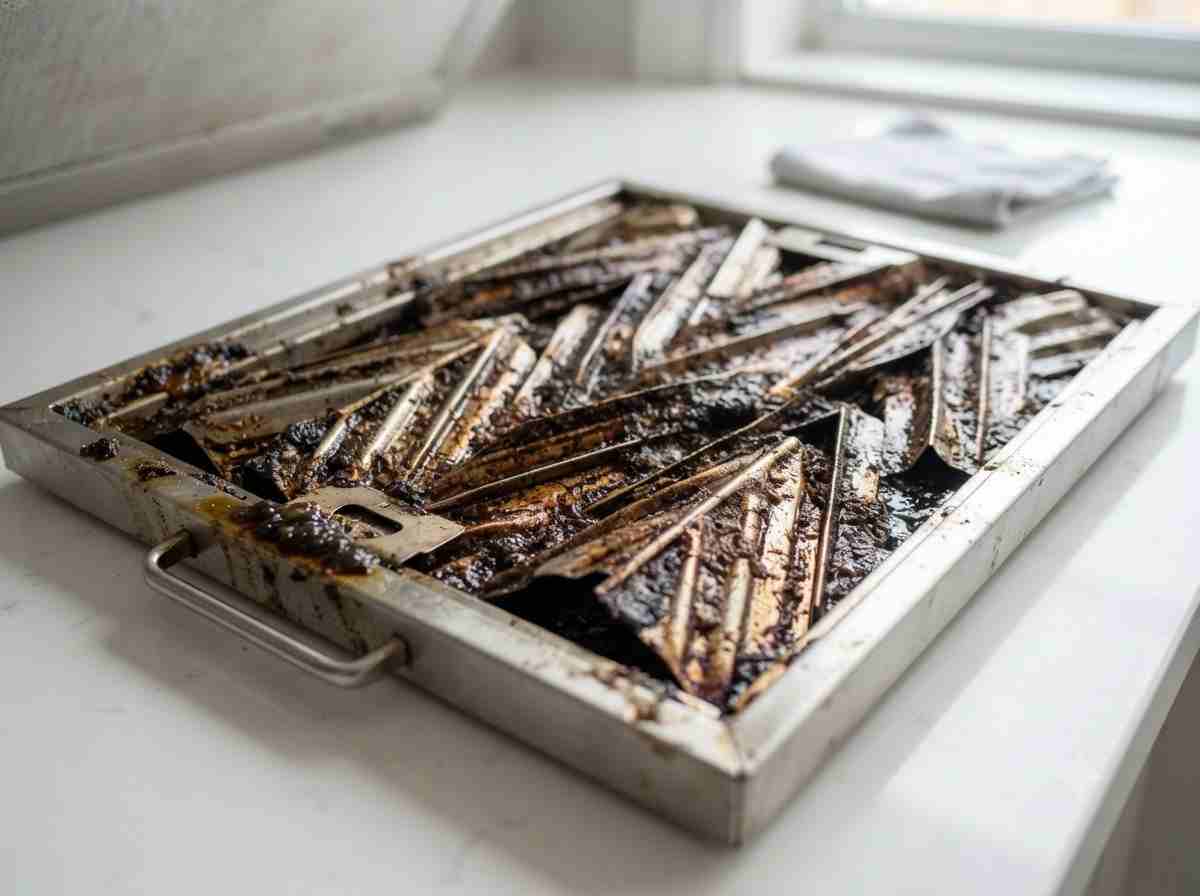
1. Grease and Dirt Buildup in the Filter
- Warning signs: Smoke lingers, the filter or baffle feels sticky, oil drips from the front, or there is a stale, greasy smell.
- What you can safely check: With the power off and the hob cool, look at the filter or baffle area and the oil collector. Dark, sticky or dripping surfaces suggest buildup.
- Maintenance steps: Remove parts only in the way your manual shows. Soak removable filters in hot water with a mild degreasing liquid, scrub gently with a soft brush, rinse and dry fully before refitting. Empty and wash the oil collector. If your model has an auto-clean function, it may not remove all residue, so follow the manual.
- When to get it inspected: If a part will not come out easily, looks damaged, or suction stays weak after cleaning.
2. Blocked, Dirty or Restricted Exhaust Duct
- Warning signs: Cooking smell returns to the kitchen, the outside flap barely opens, or weak suction seems to get worse over time.
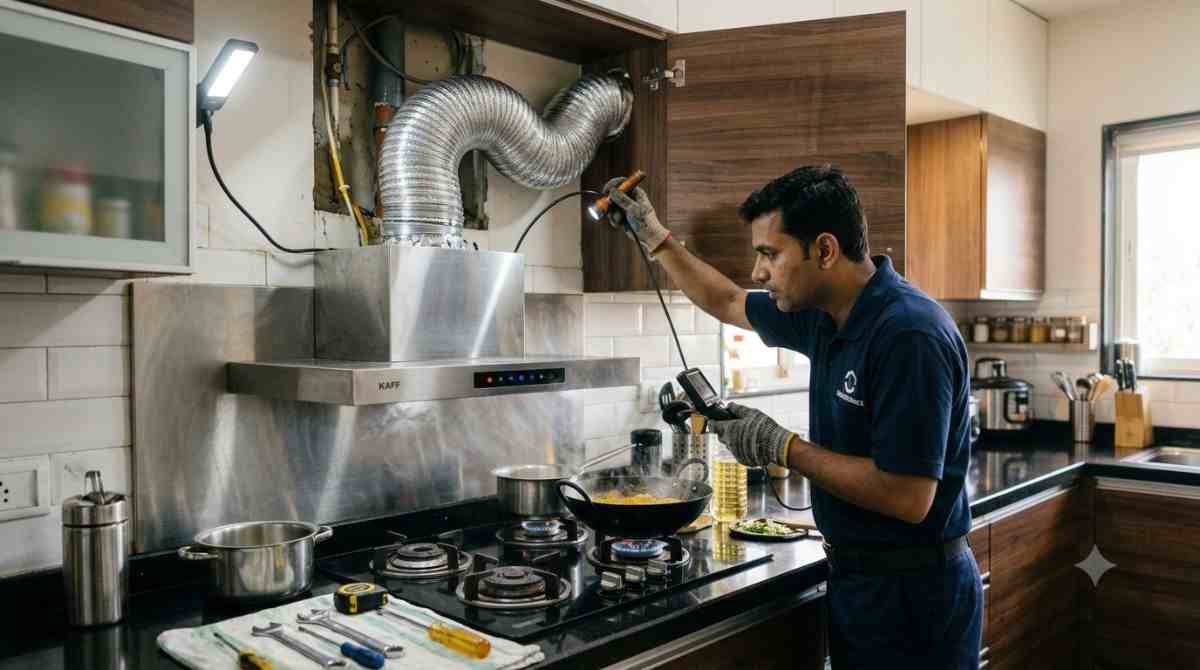
- What you can safely check: Look at the visible part of the duct for dents, kinks or loose joints. Check that any outlet flap that you can reach safely from the inside is not stuck.
- Maintenance steps: Keep the duct free from pressure or crushing during renovation. Do not climb ladders or lean out of windows to clear an outlet.
- When to get it inspected: If the duct runs inside a wall or false ceiling, is oily inside, or the outlet is hard to reach. Duct cleaning or replacement is best left to a technician.
3. Excessive Bends or Unsuitable Duct Installation
- Warning signs: Suction has been weak since installation, or it dropped after the kitchen was renovated or the chimney was moved.
- What you can safely check: Note how long the duct is, how many sharp turns it has, and whether it looks narrower than the chimney outlet. Compare this with the duct guidance in your manual.
- Maintenance steps: Shorter, straighter and properly sized ducts generally let air move more freely, and ribbed flexible pipe adds more resistance than smooth rigid duct. Any re-routing should be planned by an installer, not tried as a DIY job.
- When to get it inspected: If the duct layout looks complicated or you suspect it was never suited to your chimney.
4. Incorrectly Fitted Filters or Other Airflow Restrictions
- Warning signs: Suction dropped soon after a cleaning session, rattling near the filter, or a gap where the filter or baffle should sit.
- What you can safely check: With the power off, confirm that filters or baffles are seated the way your manual shows. Check that nothing, such as packaging or a cloth, is left in the airflow path.
- Maintenance steps: Refit parts only when fully dry and in the right position. Do not use the chimney with any filter or panel missing.
- When to get it inspected: If a part no longer fits, a clip is broken, or you cannot tell how it should be placed.
5. Fan Blade or Impeller Problems
- Warning signs: Vibration, rattling, grinding, an uneven humming sound, or noise that changes with fan speed, along with weak extraction.
- What you can safely check: Listen at different speeds. Do not reach into the fan area. Blade buildup can upset balance, but it cannot be inspected safely without opening the unit.
- Maintenance steps: Regular cleaning of the filter, baffle and oil collector reduces the grease that reaches the fan. Internal cleaning should be done by a technician.
- When to get it inspected: As soon as you hear scraping, wobbling or loud vibration. Stop using the chimney until it is checked.
6. Motor Wear, Electrical Faults or Reduced Fan Performance
- Warning signs: Slow fan speed, speeds that do not feel different, a fan that stops intermittently, a burning smell, or the chimney tripping the switch.
- What you can safely check: Try every speed setting, and confirm the supply switch and socket are working. Note any odd display or button behaviour for the technician.
- Maintenance steps: None that a homeowner should attempt. Do not open the housing, touch wiring or try to repair the motor yourself.
- When to get it inspected: Straight away if you notice a burning smell, sparks, tripping or no fan movement. Switch it off at the supply and call a qualified technician.
7. Poor Kitchen Ventilation or Incorrect Chimney Installation
- Warning signs: Smoke escapes around the sides of the chimney, suction improves when you open a window, or the problem is worse with doors and windows tightly shut.
- What you can safely check: Open a window or door slightly while cooking and see whether suction improves. Compare the chimney’s height above the hob with the mounting distance in your manual. Strong drafts from a fan or window can also push smoke away.
- Maintenance steps: Provide a source of fresh air while cooking, and use the back burners when you can for better smoke capture.
- When to get it inspected: If the chimney seems mounted too high, is smaller than the hob, or needs to be re-fixed. Re-mounting above a gas hob should be done by a qualified installer.
How to Improve Elica Chimney Suction
If your Elica chimney suction weak problem is mild, these safe, practical habits help in most kitchens. Adjust them to your model and manual.
- Clean on a schedule that suits your cooking. Heavy frying and tempering usually need more frequent cleaning than light cooking. Your manual is the best guide, and a sticky filter or full oil collector means it is time.
- Empty the oil collector regularly so it does not overflow or restrict flow.
- Use a higher speed for frying and let the chimney run for a few minutes after cooking.
- Let fresh air in. A slightly open window or door lets the chimney replace the air it removes.
- Protect the duct. Avoid crushing, bending or covering it during interior work.
- Book periodic professional inspection if your kitchen sees heavy daily use or the chimney has not been looked at for a long time.

Troubleshooting Table: Weak Elica Chimney Suction
| Symptom | Possible cause | Recommended next step |
|---|---|---|
| Sticky filter or baffle, oil dripping, lingering smoke | Grease buildup | Power off, then clean accessible parts as per your manual. |
| Cooking smell returns, outside flap barely moves | Blocked or restricted duct | Check the visible duct section; book an inspection for hidden sections. |
| Weak suction since installation | Too many bends or unsuitable duct | Ask an installer to review the duct layout. |
| Suction dropped after cleaning, rattling at the filter | Filter or baffle not fitted correctly | Power off and refit as shown in the manual. |
| Vibration, scraping or uneven humming | Fan blade or impeller problem | Stop using it and arrange a professional inspection. |
| Slow fan, stops at times, burning smell, tripping | Motor wear or electrical fault | Switch off at the supply and call a qualified technician. |
| Smoke escapes at the sides, better with a window open | Poor ventilation or installation height | Improve fresh-air supply; have mounting checked against the manual. |
| Weak suction despite clean parts and clear duct | Reduced fan performance or a combination of causes | Book a professional chimney inspection. |
When Should You Call a Professional?
If the Elica chimney suction weak problem continues after safe cleaning, call a qualified technician, especially if you hear grinding or scraping, notice a burning smell, or the chimney trips the supply. Also call for duct changes or re-mounting. If your chimney is under warranty, check your warranty card and manual first.
Need a Professional Chimney Inspection?
If your chimney still pulls weakly after the safe checks above, you can contact Appliances Repairs. Please share your chimney model (if known), your city and what symptoms you notice. You can also view our appliance repair services or our Elica chimney service page.
Appliances Repairs is an independent appliance repair service provider and is not an authorised service centre of Elica or affiliated with the manufacturer.
Frequently Asked Questions
1. Why is my Elica chimney fan running but suction is weak?
The motor may be turning while airflow is restricted. Possible causes include a greasy filter or baffle, a blocked or badly routed duct, a wrongly fitted part, fan blade buildup, motor wear or poor kitchen ventilation. Start with safe checks, then call a technician if suction stays weak.
2. Can a dirty filter reduce kitchen chimney suction?
Yes. Grease on a filter or baffle restricts the air entering the chimney, so smoke removal drops even when the fan works. Clean it as your manual directs.
3. Can a blocked exhaust duct affect chimney performance?
Yes. Air has to leave through the duct. A crushed, oily or blocked duct, or a stuck outlet flap, can reduce airflow and let smell return to the kitchen.
4. Why does my chimney make noise but extract little smoke?
Noise does not mean strong extraction. It can come from airflow restrictions, a loose or unbalanced fan, or motor wear. If the noise is unusual, have a technician inspect it.
5. When should I get the chimney motor inspected?
Get it inspected if you notice grinding, a slow or stopping fan, a burning smell, tripping, or weak suction that continues after the filter, duct and installation checks. Switch it off and avoid using it until it is checked.
6. Can kitchen ventilation affect chimney suction?
It can. If the kitchen is sealed, the chimney may struggle to pull air in to replace what it removes. A slightly open window or door, and avoiding strong cross-drafts near the hob, can help.
In short, an Elica chimney suction weak problem usually comes down to restricted airflow rather than the fan alone, so start with the filter, the duct and the kitchen’s fresh-air supply before suspecting the motor.
Looking for more kitchen appliance advice? Browse the Appliances Repairs blog.