
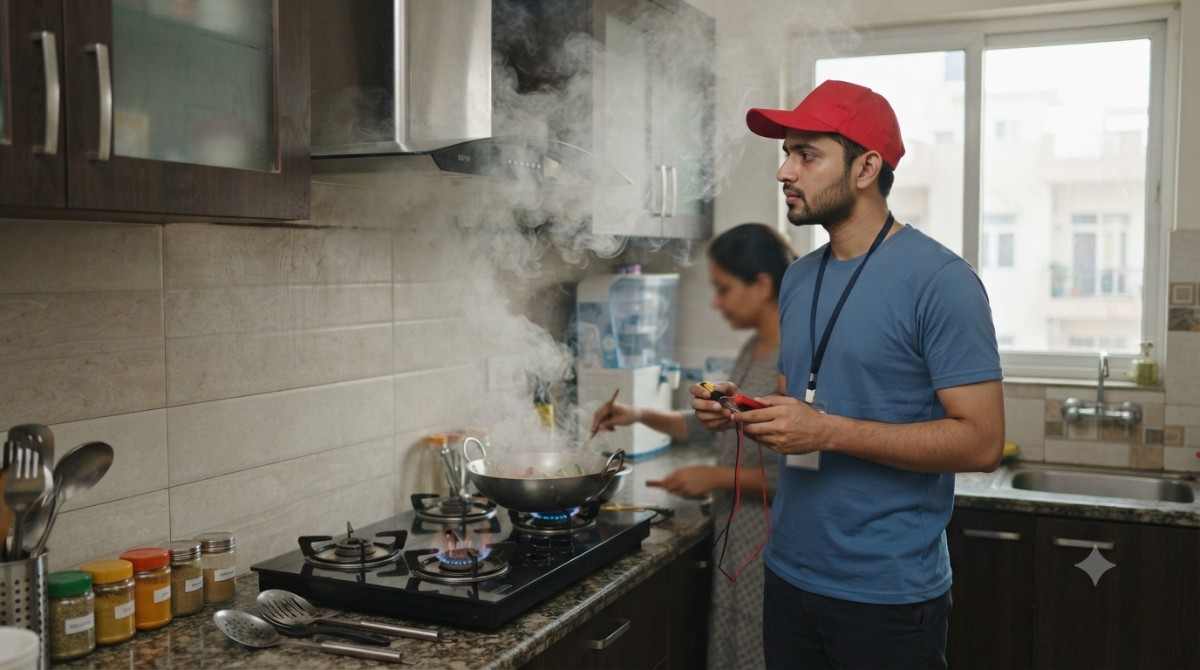
If you've noticed smoke lingering near the ceiling, oily residue settling on your kitchen walls, or a general haze that just won't clear while cooking, you're not alone. A kitchen chimney not removing smoke properly is one of the most common complaints among Indian homeowners, especially in kitchens where daily cooking involves tempering, deep frying, or high-flame preparations.
The good news is that this problem usually doesn't appear overnight, and it isn't always a sign that the appliance needs replacing. In most homes, poor smoke extraction develops gradually because of a few everyday factors — a clogged filter, a duct that's slightly blocked, or suction that has weakened over months of use without cleaning.
In this guide, we'll walk through eight things you should check before assuming the worst. We'll also cover which of these you can safely inspect yourself, and when it's time to call in a professional for a proper look.
Why Is Your Kitchen Chimney Not Removing Smoke?
A kitchen chimney works on a simple principle: it pulls smoke, steam, and airborne grease through a filter, pushes it through ducting, and releases it outside (or recirculates filtered air back into the kitchen, in ductless models). When any part of this path is compromised, suction drops and smoke starts escaping into the room instead of being pulled away.
Kitchen chimney low suction rarely has a single cause. It's usually a combination of things — a filter that hasn't been cleaned in a while, cooking style that produces more smoke than the chimney is rated for, or a duct that was never installed correctly to begin with. Understanding each possibility helps you narrow down what's actually going on in your kitchen.
1. Check for a Greasy or Clogged Filter
What the problem is
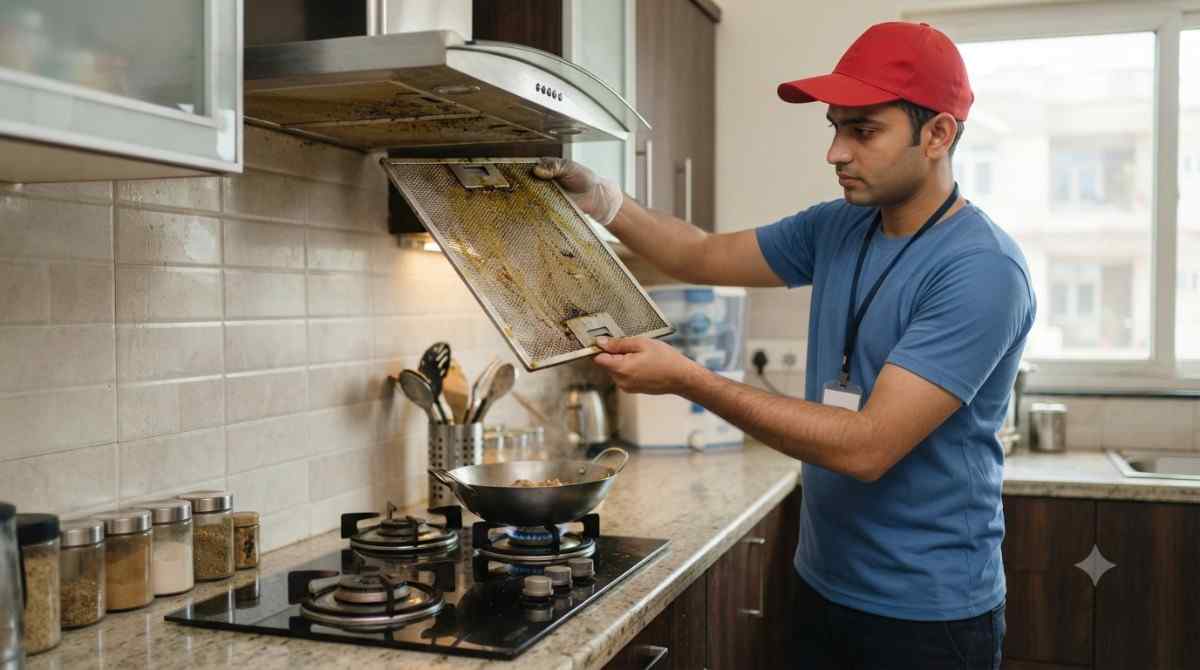
The filter is the first line of defence in any chimney, and it's also the most common reason for reduced performance. Over weeks of cooking, especially Indian-style cooking with frequent frying and tempering, filters accumulate a sticky layer of grease and oil. This buildup restricts airflow significantly, even when the motor is working fine.
Common signs
- Smoke escapes from the sides of the chimney instead of going up into it
- The chimney feels weaker than it did a few months ago
- Visible yellowish-brown grease coating on the mesh or baffle filters
- A faint burning or stale oil smell when the chimney is running
What you can safely check
Switch off the chimney and check the filter panel. If it's a mesh filter, hold it up to light — if you can barely see through it, it needs cleaning. Baffle filters should also be checked for grease pooling in the curves. Most manufacturers recommend cleaning mesh filters every 2–4 weeks and baffle filters monthly, depending on cooking frequency.
When professional inspection may be required
If the filter looks clean but suction is still poor, the issue likely lies elsewhere — possibly the duct or the motor — and a technician visit would help identify the actual cause rather than repeated filter cleaning.
2. Check the Chimney Duct for Blockage
What the problem is
Chimney duct blockage is another frequent cause of a chimney not pulling smoke effectively. Ducts can accumulate grease deposits over time, especially in homes where the duct run is long or has multiple turns. In some cases, bird nests, dust, or construction debris can partially block the outer vent opening as well.
Common signs
- Suction feels noticeably weaker at the duct outlet compared to near the filter
- A rattling or muffled sound from inside the ducting
- Smoke smell lingering in the kitchen despite the chimney running
- Reduced airflow felt at the outer wall vent, if accessible
What you can safely check
You can visually inspect the external duct opening (the one on your exterior wall) for obstructions like debris, cobwebs, or nesting material, and clear anything visible from outside. However, checking the internal sections of ducting — especially those running through false ceilings or wall cavities — is not something to attempt without proper tools.
When professional inspection may be required
If the duct is inaccessible or you suspect a blockage deep inside the ducting, this requires professional inspection. Incorrect handling of ducting sections can damage joints and create leaks, so this is best left to someone experienced in this kind of work.
3. Check Whether Chimney Suction Has Become Weak
What the problem is
A kitchen chimney suction problem doesn't always trace back to a single fault — sometimes it's the cumulative effect of an ageing motor, a partially blocked filter, and duct resistance all working together. Suction naturally reduces somewhat over the years of use, but a sudden or drastic drop usually points to a specific issue.
Common signs
- Chimney sounds normal but smoke isn't being pulled up
- You need to run the chimney on the highest speed just for basic tempering
- Suction was fine a few weeks ago and has dropped suddenly
What you can safely check
Run the chimney at different speed settings and observe whether higher settings genuinely increase airflow, or if there's barely any difference between speeds. This can hint at whether the fan or motor is struggling, even before you touch any wiring or internal parts.
When professional inspection may be required
If the difference between speed settings is minimal, or the chimney takes a while to reach full speed, a technician should assess the motor and fan assembly rather than continuing to run it at maximum settings, which can strain the appliance further.
4. A Chimney Motor Problem Could Be Affecting Suction
What the problem is
A chimney motor problem is one of the more serious causes of poor smoke extraction, since the motor drives the entire suction mechanism. Motors can weaken due to age, dust accumulation on internal components, or electrical issues within the unit.
Common signs
- Unusual humming, grinding, or rattling noise from the motor unit
- The chimney takes longer than usual to start pulling air
- A burning smell distinct from cooking smells, especially near the motor housing
- The chimney trips the power supply intermittently
What you can safely check
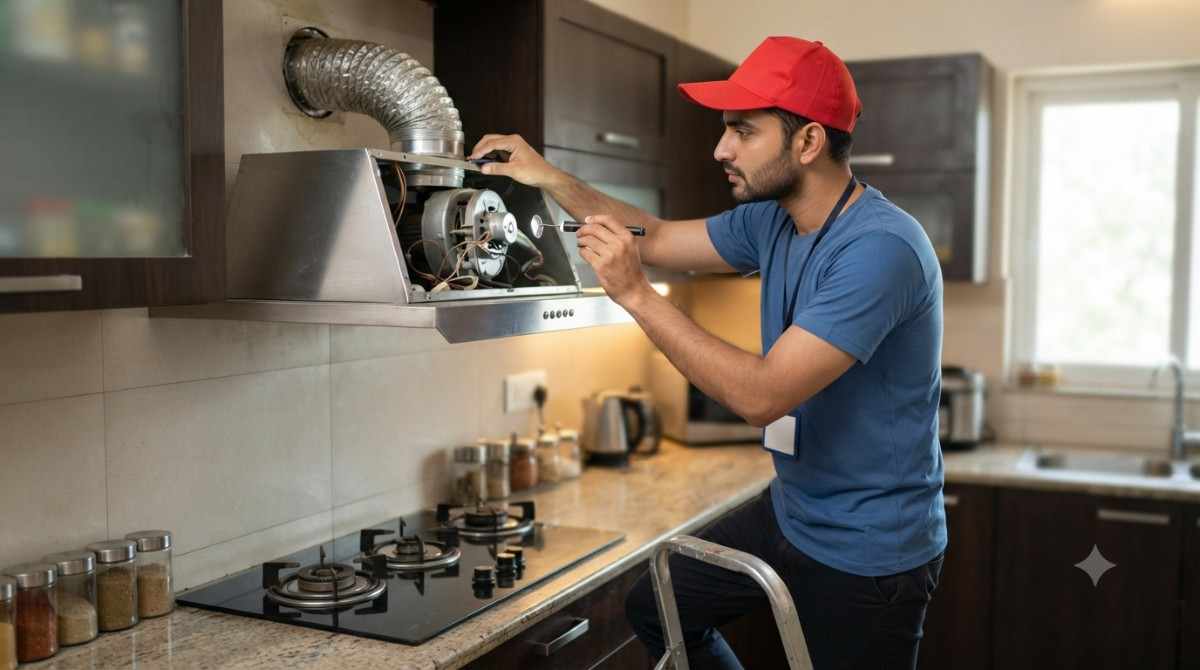
From a safety standpoint, you should only observe external symptoms — sound, smell, and how quickly the chimney responds to speed changes. Do not attempt to open the motor housing or handle any internal electrical components yourself, as this involves both electrical risk and the possibility of further damage if reassembled incorrectly.
When professional inspection may be required
Any motor-related symptom — unusual noise, burning smell, or intermittent tripping — warrants a professional inspection promptly. Continuing to use a chimney with a failing motor can be both a fire safety concern and a cause of further internal damage.
5. Check the Duct Length and Bends
What the problem is
Even a brand-new, powerful chimney can underperform if the ducting was installed with too many bends or an excessively long run to the outside vent. Every bend in a duct adds resistance, and manufacturers typically specify a maximum recommended duct length and number of turns for a reason.
Common signs
- The chimney worked reasonably well right after installation but never quite matched its rated performance
- Suction feels weaker the farther the duct travels from the unit
- Multiple sharp bends or a duct run longer than 8–10 feet
What you can safely check
Take a look at the visible duct path from your chimney unit to the exterior wall. If you can count more than two or three bends, or the duct travels an unusually long distance before reaching outside, this is likely contributing to reduced performance regardless of filter or motor condition.
When professional inspection may be required
Correcting duct length or bend issues usually means re-routing the ducting, which is a job for a professional installer or technician, particularly if it involves working through walls or false ceilings.
6. Check Chimney Installation Height and Position
What the problem is
Installation height directly affects how efficiently a chimney captures rising smoke and steam. If the unit is mounted too high above the cooktop, a significant portion of smoke disperses into the room before it reaches the suction area.
Common signs
- Smoke escapes sideways or upward past the chimney edges before being pulled in
- The chimney seems to work better for the burner directly underneath it but not for others
- The gap between the hob and chimney looks larger than in similar kitchen setups
What you can safely check
Most manufacturers recommend a distance of around 65–75 cm between the cooktop surface and the chimney for effective smoke capture, though this can vary by model. Measuring this gap yourself gives you a useful reference point before discussing the issue with a technician.
When professional inspection may be required
If the height appears incorrect, adjusting the chimney's mounting position is a physical installation task that should be handled professionally, since it involves remounting a heavy unit safely.
7. Consider the Amount of Smoke Produced During Cooking
What the problem is
Sometimes the chimney itself isn't at fault at all — the cooking style is simply generating more smoke and steam than the unit is rated to handle. High-flame cooking, deep frying, and dishes involving heavy tempering with mustard seeds or dried red chillies produce dense smoke that can overwhelm even a well-maintained chimney.
Common signs
- Smoke escapes mainly during high-flame or frying-heavy cooking, but not during regular cooking
- The chimney handles daily cooking fine but struggles during festive or bulk cooking
- Multiple burners in use simultaneously with the chimney positioned over just one
What you can safely check
Notice whether the smoke issue is consistent throughout all cooking or only during specific high-smoke activities. If it's the latter, running the chimney on a higher speed setting before starting heavy cooking, and switching it on a few minutes early, can often help.
Safety note: if you cook on a gas stove, always ensure adequate kitchen ventilation (a window or door left ajar) in addition to the chimney, particularly during long cooking sessions, to avoid smoke and gas fume build-up in an enclosed kitchen.
8. Regular Cleaning and Maintenance Matters
What the problem is
A large number of chimney service calls in Indian homes trace back to one simple issue: skipped maintenance. Chimney filter cleaning and periodic servicing are often the first things homeowners postpone, and the effects compound over time — a slightly dirty filter becomes a fully clogged one, minor duct residue turns into a real blockage.
Common signs
- It's been more than 3–4 months since the filter or unit was cleaned
- You can't recall the last time the chimney had a full service
- General performance has been declining gradually rather than suddenly
What you can safely check
Keep a simple record of when you last cleaned the filters and when the chimney was last serviced. If it's been a while, this is often the easiest and most cost-effective fix to try first.
Quick Checks You Can Do Before Calling a Technician
Before booking a service visit, it's worth running through this short list:
- Clean or degrease the filters thoroughly, even if they don't look extremely dirty
- Check the external duct vent for visible obstructions
- Run the chimney at different speeds to compare suction strength
- Measure the gap between your hob and the chimney
- Note whether the issue happens with all cooking or only heavy-smoke cooking
- Check how long it's been since the last full cleaning or service
These checks take only a few minutes and often clarify whether the issue is something simple or something that needs expert attention.
When Does a Kitchen Chimney Need Professional Repair?
Certain signs point clearly toward professional intervention rather than DIY troubleshooting:
- Unusual noise, vibration, or burning smell from the motor
- No noticeable difference in suction across speed settings
- Suspected duct blockage in sections you cannot access safely
- The chimney trips the electrical supply or behaves erratically
- Performance hasn't improved even after filter cleaning and basic checks
If you're facing any of these, it's worth getting the appliance looked at by someone experienced with chimney troubleshooting rather than continuing to use it as-is. For structured kitchen appliance support, you can explore chimney repair services or browse general appliance service options for your home.
Appliances Repairs is an independent service provider and is not an authorised service centre of the brands mentioned on this website.
Kitchen Chimney Maintenance Checklist
A simple routine can prevent most smoke-removal issues from developing in the first place:
- Weekly: Wipe down the exterior and filter surface to prevent grease hardening
- Every 2–4 weeks: Clean mesh filters in hot water with a mild degreaser
- Monthly: Check baffle filters for grease pooling in the grooves
- Every 3–4 months: Get a full servicing done, including duct and motor area inspection
- Ongoing: Keep the external duct vent free from debris, dust, or nesting
- Ongoing: Avoid running the chimney on the lowest setting during heavy-smoke cooking
Kitchens with frequent frying, tempering, or festive-season cooking may need slightly more frequent attention than this baseline schedule.
Frequently Asked Questions
Why is my kitchen chimney not removing smoke?
This usually comes down to a clogged filter, duct blockage, weak suction, or a struggling motor. Cooking style and installation height also play a role, so it's worth checking each factor rather than assuming a single cause.
How do I improve chimney suction?
Start with the basics — clean the filters thoroughly, check the duct for visible blockages, and confirm the installation height matches manufacturer recommendations. If suction is still poor after these checks, a professional inspection is the next step.
Can a dirty filter reduce chimney suction?
Yes, a greasy or clogged filter is one of the most common reasons for reduced chimney suction, since it restricts airflow before it even reaches the motor.
Can duct blockage affect chimney performance?
Definitely. Even a well-maintained chimney with a clean filter and healthy motor can underperform if the ducting is blocked, too long, or has excessive bends.
How often should a kitchen chimney filter be cleaned?
Mesh filters are generally recommended for cleaning every 2–4 weeks, while baffle filters can typically go about a month between cleanings, depending on how often and how heavily you cook.
When should a chimney motor be checked?
If you notice unusual noise, a burning smell, inconsistent suction across speed settings, or intermittent power tripping, the motor should be examined by a professional as soon as possible.
Should I repair or replace my kitchen chimney?
This depends on the chimney's age, the extent of the fault, and how it's been maintained over the years. A qualified technician can assess the unit in person and advise whether repair is worthwhile or replacement makes more sense.
Does cooking style affect how well a chimney performs?
Yes. High-flame cooking, deep frying, and heavy tempering produce more smoke than routine cooking, and a chimney that seems fine normally may struggle specifically during these activities.
Final Thoughts
A kitchen chimney not removing smoke properly is a common but usually fixable problem. In many cases, the cause is something straightforward — a filter overdue for cleaning, a duct that needs clearing, or an installation detail that was overlooked. Working through these eight checks gives you a clear starting point before deciding whether the issue needs a simple at-home fix or professional attention.
If your chimney continues to struggle with smoke removal despite basic troubleshooting, getting it examined by someone familiar with chimney troubleshooting can save you from a small issue turning into a bigger one. You can also look into related support for other kitchen appliances, including hob repair and broader kitchen appliance repair services, if other kitchen equipment needs attention alongside your chimney.